

Yixing Teapots
YIXING — 宜兴紫砂
Some of China's most celebrated teapots come from Yixing (宜兴紫砂).
Handcrafted primarily in Dingshu Town, Yixing, Jiangsu Province, Yixing Zisha is one of China's Four Famous Pottery Traditions, alongside Jianshui, Nixing, and Rongchang pottery. Although pottery has been produced in the Yixing region for much longer, the specific tradition of Yixing Zisha developed during the Song and Yuan periods and matured during the Ming Dynasty, giving the established craft more than 600 years of documented history.
What makes Yixing pottery special begins with the clay itself.
Yixing Zisha is made from distinctive mineral-rich clay found around the Yixing area. Chinese cultural-heritage sources describe the clay as having a special granular structure and a dual-pore structure, while official standards characterize Zisha as a fine, relatively iron-rich clay that becomes hard while retaining good breathability after firing.
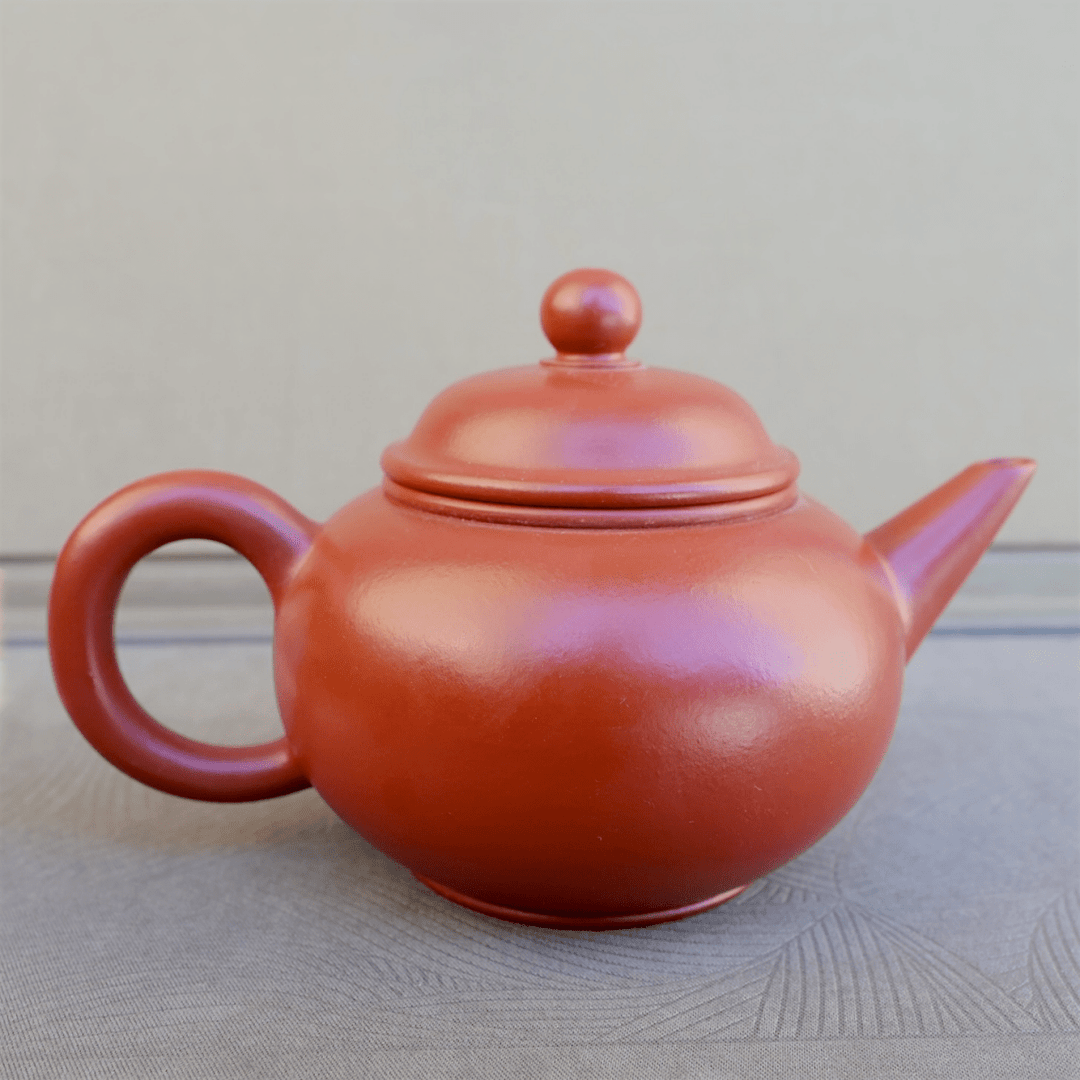
Unlike porcelain, traditional Yixing teapots are generally left completely unglazed, allowing the natural texture, color, and mineral character of the clay to remain exposed. Depending on the particular clay and firing conditions, finished pieces can range from deep purple-brown and reddish-brown to warm red, yellow-brown, and other earthy shades.
Another unusual feature of Yixing is how the pots are made.
Rather than relying entirely on wheel throwing, traditional Yixing teapots are built from carefully prepared pieces of clay using techniques such as beating, joining, and assembling clay slabs by hand. Chinese heritage authorities describe this hand-building tradition as one of the defining characteristics of Yixing Zisha craftsmanship.
Tea lovers appreciate Yixing not only for its craftsmanship, but also for the way its unglazed clay interacts with tea.
The porous structure gives Yixing a different brewing character from glazed porcelain. China's official intangible-cultural-heritage description specifically highlights the clay's breathability and its long relationship with Chinese tea culture. Because the interior remains unglazed, repeated brewing also gradually changes the surface of the pot, contributing to the traditional practice of yang hu (养壶), or “nurturing” a teapot through use.
In practical tea use, Yixing is particularly popular for teas with deeper aromas and stronger structure, including Wuyi Yancha, roasted oolong, Dancong, Shou Puerh, aged Sheng Puerh, and Heicha. Different clay bodies, firing levels, pot shapes, and wall thicknesses can behave quite differently, which is why experienced tea drinkers often choose a particular Yixing pot for a particular style of tea. Chinese materials-science-oriented tea literature likewise emphasizes Yixing's porous structure when discussing its suitability for richer teas.
Over time, a frequently used Yixing pot can develop a soft, increasingly lustrous patina on the outside, while the interior develops its own history through repeated brewing.
This evolving relationship between pot and tea is one of the reasons Yixing occupies such a special place in Chinese tea culture: the teapot is not simply a container—it is an object designed to change with use.