


Japanese Teacups
JAPANESE TEACUPS & YUNOMI — 湯呑み
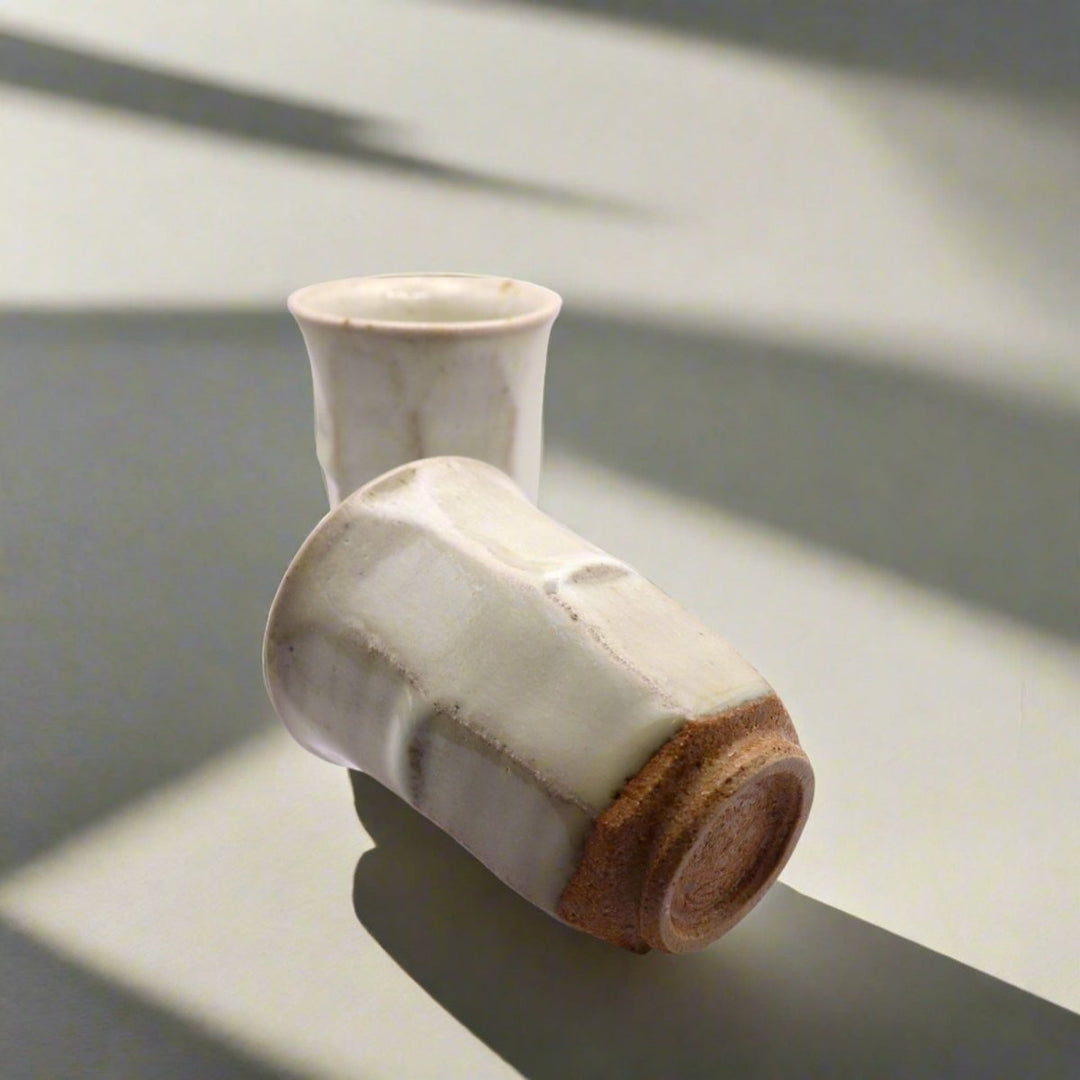
The yunomi (湯呑み) is a handleless Japanese teacup traditionally used for everyday teas such as sencha, bancha, genmaicha, and hojicha. Unlike the wide chawan used for preparing matcha, yunomi are generally taller than they are wide and designed to rest comfortably in the hands.
Although tea has been enjoyed in Japan for more than a thousand years, yunomi became closely associated with everyday tea drinking during the Edo period, as steeped leaf teas such as sencha became increasingly popular. Potters throughout Japan began creating practical cups using their own regional clays, glazes, and firing traditions.
Japanese yunomi are usually larger than Chinese Gongfu teacups. A Gongfu cup often holds approximately 20–60 ml, while a yunomi commonly holds around 100–250 ml. Chinese cups are designed for small, repeated infusions that may be shared, while yunomi generally provide a more generous individual serving.
The material, shape, rim, balance, and weight of a teacup can all influence how we perceive a tea’s flavor, aroma, temperature, and texture. Smooth porcelain and glazed interiors offer a cleaner, more neutral presentation, while textured stoneware and heavier glazes can create a warmer, softer, and more tactile drinking experience.
Our collection includes teacups from several respected Japanese pottery traditions:
-
Tokoname Ware (常滑焼): One of Japan’s Six Ancient Kilns, known for iron-rich red clay and balanced, functional teaware.
-
Shigaraki Ware (信楽焼): Rustic pottery from Shiga Prefecture celebrated for natural ash glaze, warm fire colors, and expressive clay texture.
-
Koishiwara Ware (小石原焼): Made in Tōhō Village, Fukuoka, and recognized for practical everyday forms decorated with rhythmic brush, comb, and tobikanna patterns.
-
Banko Ware (萬古焼): A Mie Prefecture tradition known for durable teaware, earthy colors, and distinctive iron-rich purple clay.
-
Kyo-yaki and Kiyomizu-yaki (京焼・清水焼): Kyoto ceramics admired for refined forms, elegant glazing, hand-painted decoration, and artistic variety.
A thoughtfully made yunomi should feel comfortable against the lips, balanced in the hand, and appropriate for the tea being served.
With Japanese teacups, the vessel becomes part of the experience—the tea is enjoyed through its flavor and aroma, but also through the cup’s warmth, weight, and texture.