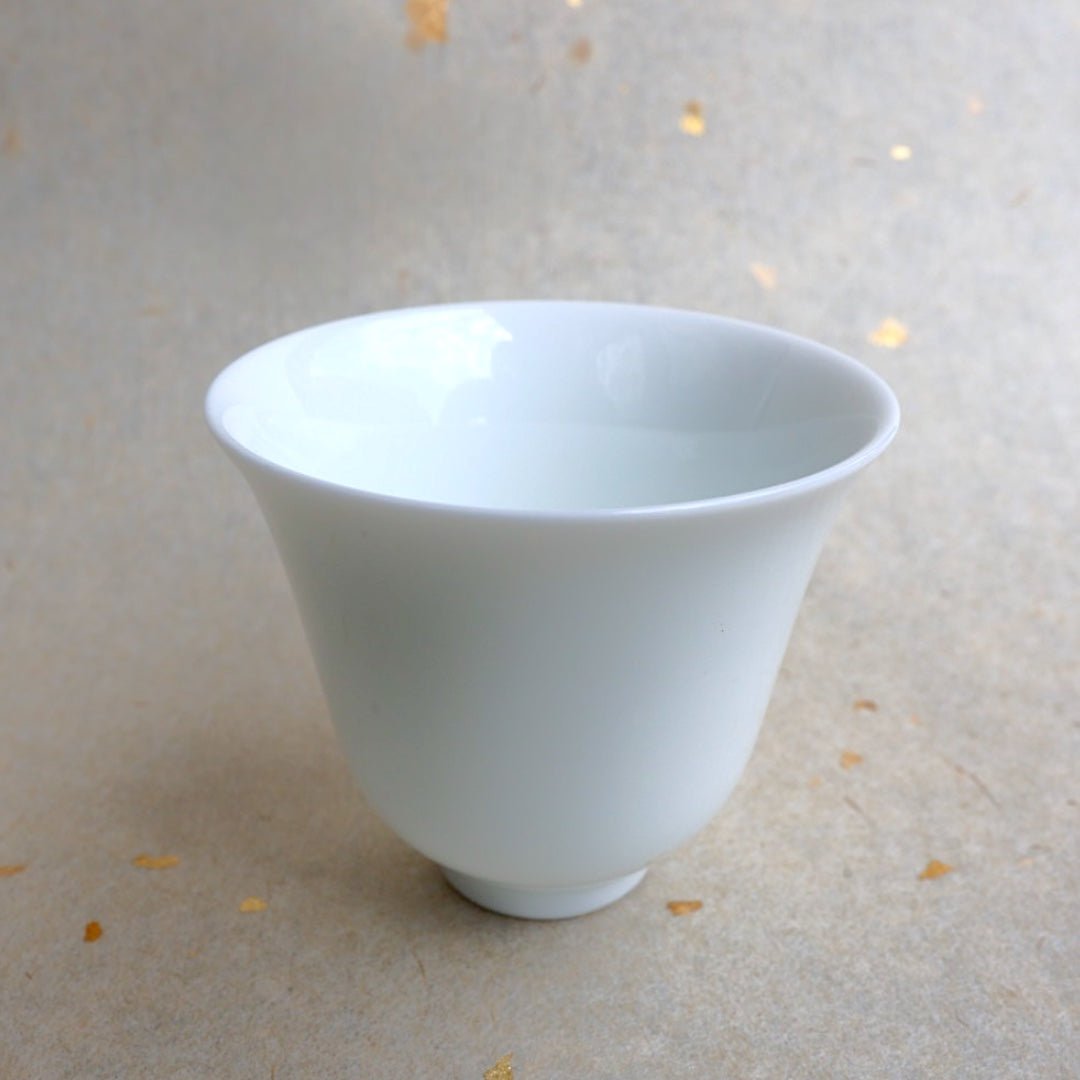


Jingdezhen Teacups
JINGDEZHEN TEACUPS — 景德镇瓷杯
Some of China’s finest porcelain teacups come from Jingdezhen (景德镇).
Located in Jiangxi Province, Jingdezhen belongs to a different ceramic tradition from Yixing, Jianshui, and Nixing. Rather than becoming famous for unglazed clay teapots, Jingdezhen developed into China’s great center of porcelain production, earning its enduring reputation as the “Porcelain Capital” (瓷都).
Porcelain was already being produced in Jingdezhen during the Five Dynasties period, with the craft flourishing through the Song and Yuan dynasties. During the Ming and Qing dynasties, imperial kilns were established at Zhushan, transforming Jingdezhen into China’s most influential porcelain-production center. Jingdezhen handmade porcelain-making was included in China’s first National Intangible Cultural Heritage list in 2006.
In July 2026, the Jingdezhen Handicraft Porcelain Industry Heritage Sites were inscribed on UNESCO’s World Heritage List, becoming the world’s first World Heritage property centered on porcelain’s complete historical production system.
Why does the material of a teacup matter?
The vessel used to drink tea can subtly influence how we perceive its aroma, flavor, temperature, and texture. Porous or heavily textured materials may soften certain qualities, retain aromas, or change how the liquor feels as it enters the mouth.
Porcelain is one of the most neutral materials for tasting tea.
When properly fired, Jingdezhen porcelain becomes highly vitrified, dense, and extremely low in water absorption. Its glazed surface does not readily absorb the aroma or flavor of previous teas, allowing the character of the tea itself to remain clear and recognizable.
This makes porcelain teacups especially useful when drinking:
-
Delicate green and white teas
-
High-mountain and lightly oxidized oolongs
-
Aromatic Dancong
-
Black tea
-
Sheng and Shou Puerh
-
Any tea being tasted or compared carefully
Unlike an unglazed clay cup, a glazed porcelain teacup does not need to be dedicated to one type of tea. After proper cleaning, the same cup can be used for many different teas without intentionally carrying the character of the previous tea forward.
Designed for the way tea is actually enjoyed
A well-designed teacup is about more than decoration.
The shape, rim, balance, and weight all affect the drinking experience. The curve of the cup influences how the aroma gathers, while the thickness and angle of the rim determine how the tea flows onto the tongue. A thoughtfully balanced cup should feel comfortable and secure in the hand, with enough weight to feel substantial without becoming heavy or clumsy.
Properly made Jingdezhen porcelain can also be surprisingly durable. Its high-fired, vitrified body creates a strong and hard ceramic structure suitable for regular tea drinking when handled with reasonable care.
The best Jingdezhen teacups are therefore created with both beauty and the tea drinker in mind: comfortable to hold, balanced in weight, pleasant against the lips, durable enough for regular use, and neutral enough to let the tea speak clearly.
Jingdezhen porcelain does not attempt to add its own character to the tea.
Its purpose is to step quietly out of the way, allowing you to experience the tea’s aroma, flavor, and texture as clearly as possible.